
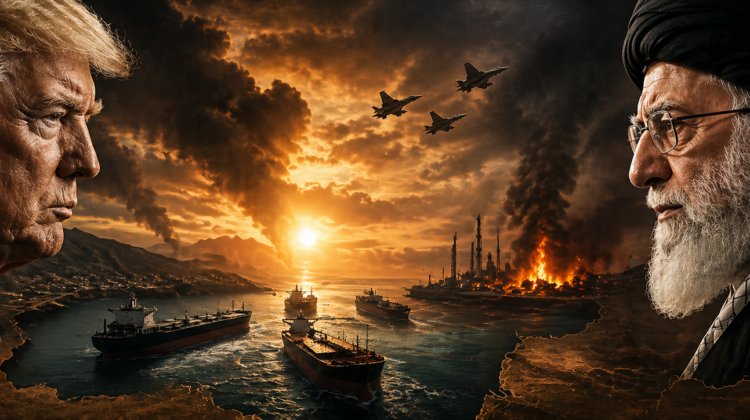
The fragile ceasefire around Iran is starting to look more like a pause button than a solution – and the global consequences are escalating fast. ⚠️
Trump Rejects Iran’s Deal – Tensions Stay High 🧨
Iran came to the table with what seemed like a reasonable opening move: reopen the Strait of Hormuz 🚢 and agree to delay nuclear negotiations until after the war formally ends. A step forward, surely?
Not according to Donald Trump!
The US President flatly rejected the proposal, insisting that the naval blockade stays in place until Iran agrees to far stricter nuclear terms. And in typical Trump fashion, he didn’t stop there – he doubled down, claiming the blockade is “more effective than bombing” and describing Iran as “choking like a stuffed pig.” 🐷
The message from Washington is unmistakable: pressure, not compromise, is the strategy.
👉 The result? A grinding stalemate:
- The ceasefire technically holds
- Shipping disruptions continue
- The risk of escalation remains very real
Shock Move: UAE Quits OPEC 🛢️
Just when the energy picture couldn’t get more complicated, the United Arab Emirates dropped a bombshell 💥 – officially announcing its exit from OPEC and OPEC+, effective May 1.
This is a huge deal. The UAE is one of OPEC’s largest producers, with the capacity to pump nearly 5 million barrels per day. Its departure significantly weakens the cartel’s ability to control oil prices and lays bare the growing fractures within the Gulf.
Why did the UAE walk?
- 😤 Long-running frustration with OPEC’s production caps
- 📈 A desire to increase output and revenue on its own terms
- 🌍 A broader strategic shift toward economic independence – and closer alignment with the US and Israel
And here’s the twist: Trump welcomed the move, saying it could help bring energy prices down. The UAE’s exit is being seen, in part, as a geopolitical realignment as much as an economic one.
Oil Markets in Chaos – But Not for the Reasons You’d Expect 📉
You might assume that a weakened OPEC means cheaper oil. Think again.
Oil prices remain volatile and elevated 📈 – because the Strait of Hormuz disruption is drowning out everything else. Roughly one-fifth of the world’s oil passes through that narrow waterway. Right now, it is anything-but open for business.
Global supply chains are under pressure. Sweden has already warned of jet fuel shortages. And with no resolution in sight, markets are bracing for more turbulence – regardless of what OPEC does or doesn’t decide.
The Bigger Picture: A Fragmenting Energy World 🌐
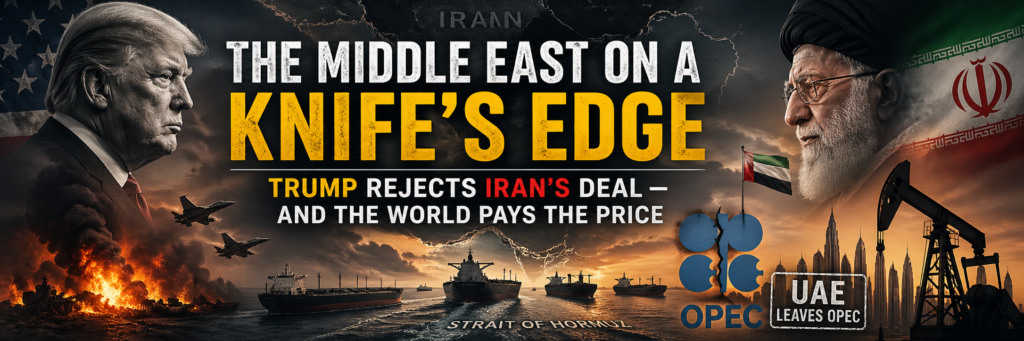
What we’re witnessing isn’t just a regional conflict. It’s a global realignment playing out in real time:
- 🇺🇸 The US is applying maximum pressure on Iran
- 🇦🇪 The UAE is breaking away from traditional alliances
- 🛢️ OPEC is losing cohesion
- 🌍 Energy markets are becoming more unpredictable by the day
Analysts warn that the UAE’s exit could permanently reshape long-term oil pricing power and weaken the kind of coordinated supply control the world has relied on for decades.
Final Take: A Turning Point Moment ⚖️
This moment feels bigger than one rejected deal or one country leaving a cartel.
What we have right now is:
- A ceasefire without resolution 🕊️
- A cartel without unity 🛢️
- A market without stability 📊
🔥 The combination of Trump’s hardline stance and the UAE’s OPEC exit could mark the beginning of a new era in global energy politics – one where the old rules no longer apply, and the new ones haven’t been written yet.
Watch this space.
Sources: Reuters | Axios | New York Post | Business Insider | Al Jazeera | PBS NewsHour
Read more…
- Hormuz Crisis Contradiction: The Strait Is Open. Please Turn Around. 🤣
- Hormuz: Energy, Ego, and Escalation🔥
- Orange Man Thinking: The Unshakeable Confidence of the Deeply Uninformed

Leave a Reply